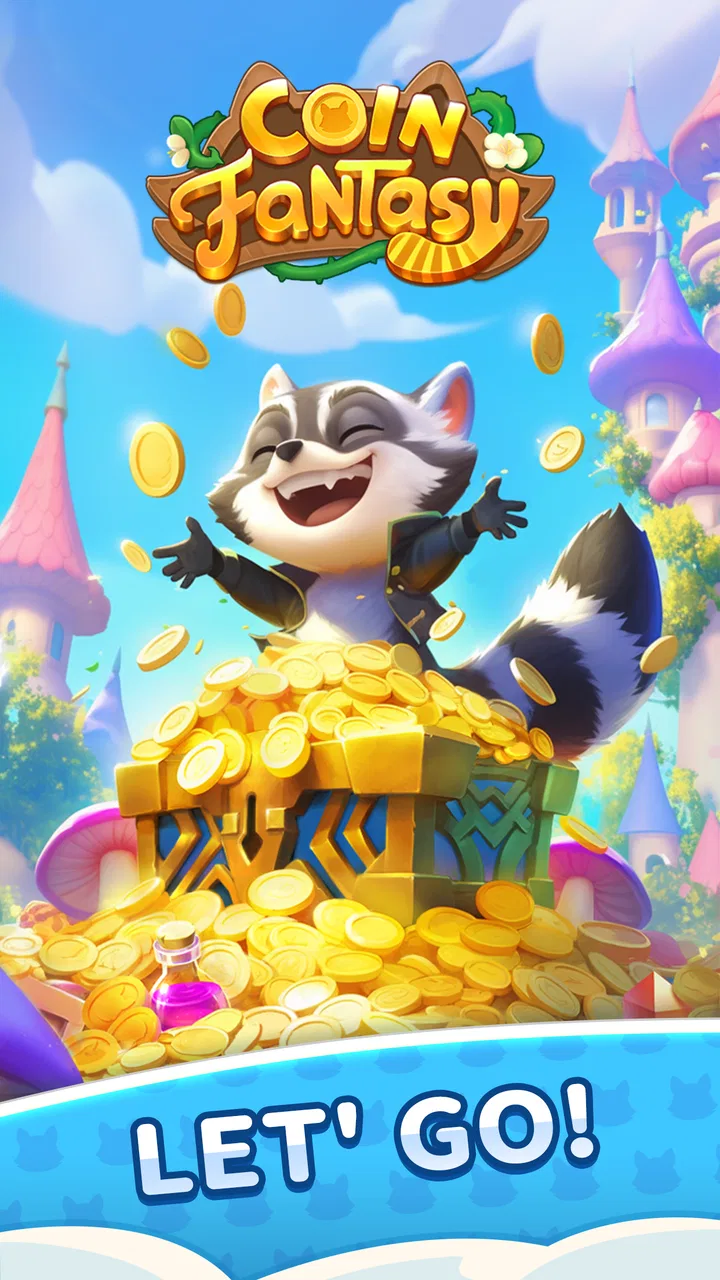
Coin Fantasy
- 4.8
- Rating
- 100.00K
- Installs
- Free
- Price

 Analysis by App-foxy
Coin Fantasy is the kind of casual game I can open with almost no preparation. Its central idea is easy to understand: spin, collect coins, and use the results to build up the game world. That simplicity is the main reason it feels inviting during the first few sessions. I do not need a long tutorial or a complicated control scheme before I can make progress.
After spending time with it, though, I found that the more important question is not whether it is enjoyable at first. It is whether the spin-and-build loop continues to feel worthwhile once the initial curiosity fades. My answer is fairly positive, but with an important qualification: Coin Fantasy works best as a light, repeatable pastime rather than a game I would expect to occupy every spare hour.
Developed by CiaoGames LTD, this free casual game is aimed at players who like short sessions, visible progress, and a little bit of luck in the way rewards arrive. It carries an Everyone 10+ content rating, so it is positioned as an accessible choice for a broad audience while still being more suitable for older children and adults than for very young players. The game has built a strong reception, with a 4.8 average from around 12K ratings and more than 100K installs.
You May Also Like

 AccuWeather: Weather Radar
AccuWeather Review: A Quick, Clear Forecast for Everyday Decisions
For everyday plans, the best forecast is the one you can understand quickly. AccuWeather makes rain timing, radar, and local conditions easy to act on, with a few trade-offs.

 Hill Climb Racing
Why Hill Climb Racing Still Turns Crashes Into One More Run
A tiny car, a bumpy hill and one more upgrade: Hill Climb Racing keeps resurfacing because its simple chaos makes every near-miss feel personal.

 AliExpress - Shopping App
AliExpress Makes Global Shopping Feel Personal, but Shoppers Bear the Risk
AliExpress turns a global marketplace into a pocket-sized discovery engine. Its reach is useful, its shopping loop compelling, and its trade-offs easy to miss.

 Lords Mobile: Kingdom Wars
Lords Mobile Is a Kingdom-Building Routine, Not a Quick Match
A case-by-case verdict on the building, battles, device demands, and social commitments that make Lords Mobile rewarding for some players and exhausting for others.

 PDF Scanner app - TapScanner
TapScanner Makes Paperwork Easier to Capture, Check, and Share
TapScanner makes scanning with a phone feel less like a rescue operation and more like a dependable step in getting work done. Its capture tools are useful, though not flawless.

 Block Blast!
 Shows How Much a Puzzle Game Can Leave Out
A quiet grid game shows why puzzle players increasingly value instant clarity, repeatable skill and low-pressure play—and where the genre still needs to catch up.
More From Our News Desk
View All News


Why the first week feels so inviting
My first impression was shaped by how quickly the main loop becomes readable. The spin gives me an immediate action, the reward gives me a reason to continue, and the building element turns those rewards into something that feels more permanent than a single lucky result. That sequence is much easier to pick up than a strategy game with several resources, menus, and overlapping upgrade trees.
This is particularly useful when I want a game for small breaks. A few minutes while waiting for an appointment, during a commute, or between household tasks is enough to make some progress. I do not have to remember a complicated objective from the previous session. The game presents a straightforward reason to return, which is one of its strongest design choices.
The first week also benefits from the pleasant tension between chance and planning. A spin is unpredictable, but the building side gives the outcome a practical purpose. Even when the result is not exactly what I hoped for, I can usually connect it to the broader feeling of developing something. That connection keeps the game from feeling like a completely empty randomizer.
I would recommend the opening experience to someone who normally avoids demanding games. There is no need to master timing, memorize a large map, or learn a complex combat system. It is also a reasonable choice for a player who wants something more interactive than a passive puzzle or a simple idle title, without committing to a long campaign.
How I would use it during an ordinary day
My most natural routine would be to play in short clusters rather than sit down for a long uninterrupted session. I might make a few spins in the morning, check the building progress later, and return in the evening when I want a low-pressure distraction. That rhythm suits the game better than trying to force a marathon session out of a loop designed around repeated small actions.
A useful habit is to decide before opening the game whether I am checking progress or actively playing. If I only have a minute, I can take care of the immediate action and leave. If I have more time, I can look at how the latest rewards fit into the broader building process. Separating those two moods helps prevent the game from turning every short break into a longer session than I intended.
Another practical tip is to treat early rewards as information rather than a reason to rush. The first sessions teach me how quickly the game’s economy moves and how satisfying the building decisions feel. I would avoid making assumptions about the value of every purchase or upgrade until I had seen enough of the normal loop. That is especially important in a free game with optional in-app purchases ranging from $0.99 to $169.99 per item.
That price range is not a reason to reject the game, but it is a reason to use restraint. I would play the free experience first, decide whether the basic loop has genuine staying power, and only then consider spending anything. A casual game should fit around my budget, not encourage me to treat a lucky result as a reason to buy immediately.
What remains after the novelty wears off
The first-week appeal is clear, but long-term value depends on whether building continues to provide a meaningful sense of direction. In my experience, this is where Coin Fantasy becomes more selective. Players who enjoy watching a collection or game space gradually take shape may keep finding small reasons to return. Players who need constant new mechanics, a strong narrative, or increasingly difficult challenges may reach the limits sooner.
The game’s month-to-month strength is its low mental cost. I can return without relearning controls or remembering a complicated plot. That makes it easier to maintain as a background hobby. It is the sort of title I can keep installed for occasional use, particularly when I want a familiar activity rather than another demanding decision.
However, low mental cost can become low emotional investment if the building progress stops feeling personal. The game needs to give me enough visible movement to make another session feel connected to the previous one. If I am only repeating spins without caring about the result, the loop starts to resemble a routine task instead of play. That is the main long-term risk.
For me, the best way to preserve interest is to set small goals around the building process. Rather than spinning aimlessly, I would choose a modest target, pay attention to what helps reach it, and stop when the session begins to feel automatic. This creates a natural endpoint and keeps the game from becoming an endless background habit.
Who is likely to keep playing
Coin Fantasy is a good fit for someone who likes incremental progress and does not mind luck being part of the experience. It can also suit players who enjoy checking in repeatedly, seeing a result, and making a small step forward. The casual category is accurate: the game asks for attention, but not the kind of sustained concentration required by competitive action games or deep management simulators.
I can also see it working for a player who wants a shared recommendation with a friend but does not want to explain a complicated ruleset. The basic concept is easy to describe, and the early experience does not demand specialist knowledge. That accessibility is a real advantage when a game is meant to be picked up casually.
On the other hand, I would skip it if I were looking for a carefully written story, tactical depth, or a skill-based system where success depends mainly on my decisions. The spin introduces an element of uncertainty that some players will find entertaining and others will find frustrating. If random outcomes make me feel that progress is outside my control, the building layer may not compensate for that feeling.
Maintenance, repetition, and the small costs of returning
One thing I appreciate is that the game does not require me to turn it into a major project. Its maintenance burden is mostly about managing my own attention. I need to decide how often I want to check in, how much repetition I can tolerate, and whether the current reward feels worth another session. That is lighter than maintaining a large competitive game, but it is still a real consideration.
The version I reviewed is 3.5.6.2, and the game supports devices running Android 7.1 or later. Those details make it approachable for people who are not using a recent phone, although the actual comfort of play will still depend on the device and how smoothly it handles the game. I would check compatibility before installing on an older handset, especially if storage or performance is already a concern.
Because the game is free to start, the main maintenance issue is not an entry fee. It is the temptation to spend when progress feels slow or when a desirable result does not arrive. The presence of individual purchases from $0.99 up to $169.99 means I would strongly recommend setting a personal spending limit before playing. That is sensible for any chance-influenced casual game, but particularly important here because the low-friction loop makes it easy to keep tapping.
A good personal rule would be to avoid buying during a moment of disappointment. If a spin produces less than I wanted, I would close the game and return later rather than immediately trying to correct the result with a purchase. This is one of the most useful ways to keep a free casual game enjoyable: make spending a planned choice, never an emotional response.
I would also keep notifications and checking habits under control if the device makes them easy to manage. The game is most pleasant when I choose to open it, not when it repeatedly pulls me away from work, conversation, or rest. Its casual design makes it easy to fit into a day, but that same convenience can make overchecking feel normal.
The comparison with familiar casual alternatives
Compared with a traditional puzzle game, Coin Fantasy puts less emphasis on solving a clearly defined problem and more on the anticipation of a result followed by gradual development. A puzzle gives me a direct test of skill; this game gives me a lighter rhythm of chance, reward, and construction. I would choose the puzzle when I want to exercise concentration, and Coin Fantasy when I want a softer, less demanding break.
Compared with an idle game, it feels more active because I am directly involved in the spin-and-build cycle rather than simply watching numbers accumulate. At the same time, it does not offer the same kind of deep planning I might expect from a full management game. That middle position is useful, but it also explains why some players may outgrow it: it is neither a pure idle experience nor a detailed strategy sandbox.
Compared with a competitive casual game, it is less dependent on opponents, rankings, or performance pressure. That makes it friendlier for relaxing play, but it also means there may be less urgency for someone who enjoys rivalry. If my favorite part of mobile gaming is beating another player or improving a precise score, I would probably get more lasting value elsewhere.
Where fatigue begins
The main source of fatigue is repetition without a fresh personal objective. Spinning is satisfying when I am curious about what comes next or when the result clearly contributes to a building goal. It becomes less satisfying when the action feels like a button I press simply because it is available. That distinction may appear small, but it determines whether the game remains a hobby or becomes digital routine.
Another possible friction point is the balance between control and luck. Building suggests ownership and planning, while spinning reminds me that progress is partly unpredictable. That contrast is central to the game’s identity, yet it can also produce mixed feelings. I may understand what I want to build without having full control over how quickly I can reach it.
The purchase structure can add another layer of fatigue. Even without spending, I may become more conscious of the possibility of paid acceleration. For some players, that will be harmless background information. For others, it can weaken the feeling that progress is being earned naturally. I would be more comfortable recommending the game to someone who is confident about ignoring optional purchases.
There is also a difference between a game that is easy to revisit and one that gives me a strong reason to revisit. Coin Fantasy clearly handles the first task. The second depends on how much I care about the building outcome and how well the reward rhythm matches my expectations. If I need constant novelty, the game may feel thin after the opening period.
My practical solution is to use it in seasons. I would play regularly while the building process feels rewarding, then take a break when the sessions become mechanical. Since the game is free and casual, there is little reason to force daily commitment. Returning with some distance can make the simple loop feel pleasant again, while continuing through boredom usually makes the fatigue worse.
My long-term verdict
After the novelty fades, Coin Fantasy earns a place on my phone only if I treat it as a compact, low-pressure game rather than a primary entertainment platform. Its strongest qualities are immediate accessibility, an understandable spin-and-build loop, and progress that can be enjoyed in short sessions. Those qualities make it easy to recommend to friends who want something casual and uncomplicated.
Its weaknesses are equally important. The loop can become repetitive, luck may frustrate players who want direct control, and the available purchase range calls for careful spending habits. The game is not the right choice for someone seeking narrative depth, demanding strategy, or a competitive challenge that constantly tests skill.
For everyday use, I would install it when I wanted a small recurring distraction with a visible sense of development. I would keep sessions bounded, set goals instead of spinning without purpose, and avoid purchases until I had decided that the free experience genuinely deserved support. Those habits preserve the parts I enjoy while reducing the chance that the game turns into a chore.
Coin Fantasy is free to try, and its current version is a solid fit for the audience it targets. The 100K-plus install base and strong average rating suggest that the accessible formula has connected with many players, but popularity alone does not guarantee lasting value for everyone. My final view is that it succeeds as a casual companion: easy to start, pleasant in short bursts, and worth keeping for players who enjoy gradual progress. I would recommend it with one clear condition: let the building loop earn your continued attention before you let it become part of your daily routine.
FAQs for Coin Fantasy
01What is Coin Fantasy and how does the game work?
Coin Fantasy is a virtual cryptocurrency trading game designed to let users practice portfolio management without directly risking real money. Players typically build a simulated portfolio, choose assets, follow market movements, and compete through performance-based challenges or rankings. The experience focuses on learning market behavior and making strategic decisions rather than completing real cryptocurrency transactions.
02Do I need real money or cryptocurrency to play Coin Fantasy?
In general, Coin Fantasy is designed around simulated gameplay, so users can usually participate without depositing real money or owning cryptocurrency. Any virtual coins, rewards, or portfolio values shown in the app should be treated as part of the game environment unless the developer clearly states otherwise. Always review the current terms before assuming that rewards have cash value or can be withdrawn.
03Is Coin Fantasy suitable for beginners in cryptocurrency trading?
Coin Fantasy can be useful for beginners because it presents trading concepts in a more approachable, game-like format. It may help new users understand volatility, diversification, portfolio choices, and the consequences of market timing. However, it should not be considered a complete investment course. Beginners should still research cryptocurrency independently and avoid treating simulated results as proof of real-world trading ability.
04Can I win real cryptocurrency or withdraw money from Coin Fantasy?
Whether Coin Fantasy offers real prizes, cryptocurrency rewards, or withdrawals depends on the specific version, competition, region, and current developer policies. Many features may use points or virtual assets strictly for rankings and entertainment. Before playing competitively, check the official rules, eligibility requirements, verification procedures, fees, and withdrawal conditions. Never assume that an in-game balance automatically represents withdrawable funds.
05Is Coin Fantasy safe to download and use?
Coin Fantasy should be downloaded only from a trusted official store or a verified developer source. Before installing, check the publisher name, recent user reviews, requested permissions, privacy policy, and update history. Avoid unofficial modified versions that may contain malware or falsely promise guaranteed rewards. Also remember that market-themed games can encourage competitive behavior, so use the app responsibly and protect any account information you provide.
Pros
- Simple gameplay makes crypto concepts easier for beginners to understand.
- Virtual rewards let users practice without risking their own money.
- Competitive challenges can make learning about markets more engaging.
- Short sessions are convenient for checking progress throughout the day.
- The game encourages users to follow real-world crypto market movements.
Cons
- Market-based outcomes may feel unfair during sudden price fluctuations.
- Some features may require an account or personal information to access.
- The educational value is limited if players focus only on winning rewards.
- Crypto terminology can still be confusing for users with no prior knowledge.
- Availability and rewards may vary depending on location or platform updates.

Coin Fantasy
Gallery